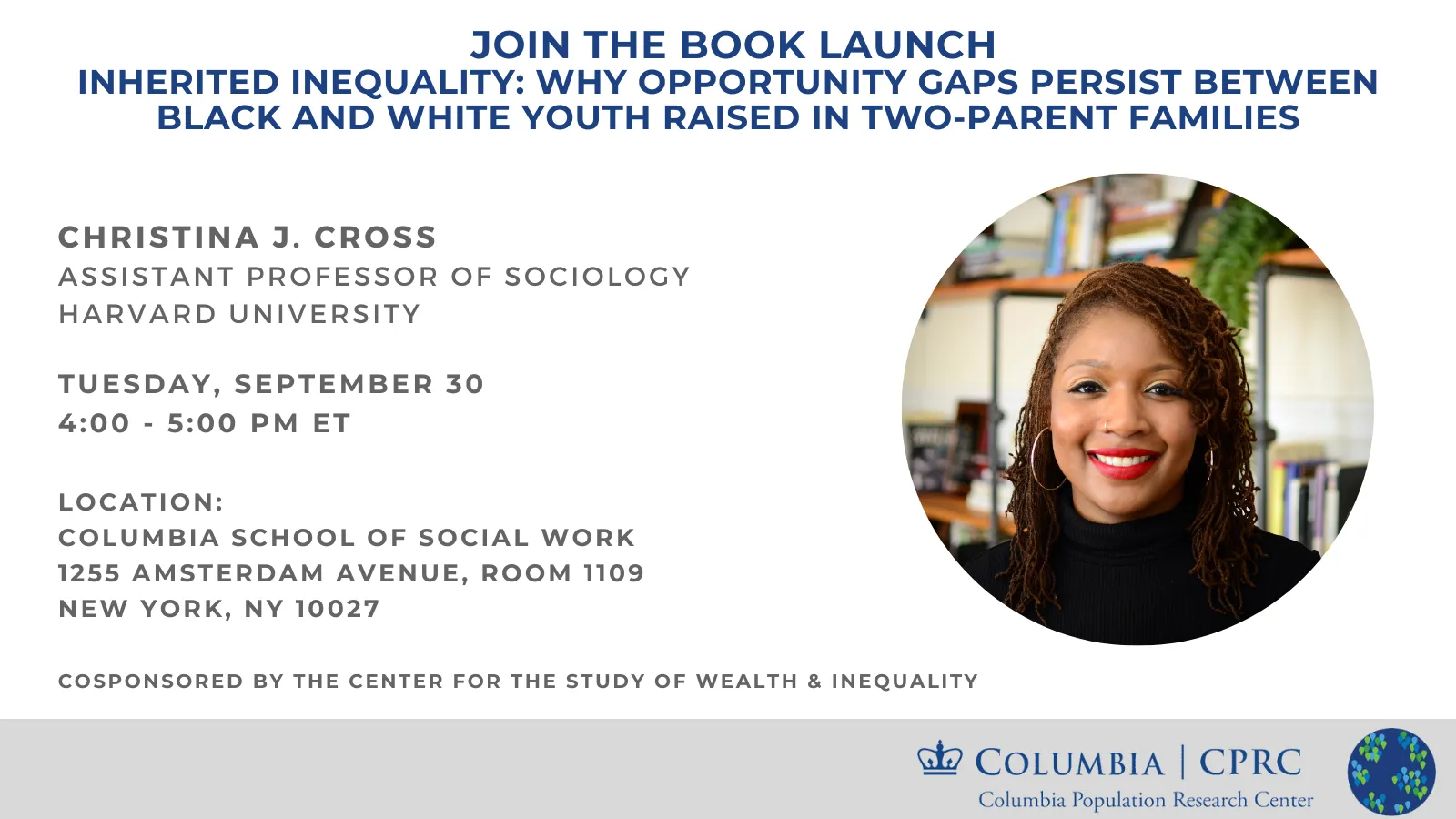
Inherited Inequality: Why Opportunity Gaps Persist between Black and White Youth Raised in Two-Parent Families
Inherited Inequality is a decisive refutation of this narrative and a definitive account of the harm it has caused. Marshaling extensive longitudinal data of African American and white children from birth through young adulthood, sociologist Christina Cross demonstrates that the two-parent family is no equalizer. While growing up with two parents increases average household income and allows for more parental involvement, the resulting gains are racially skewed: Black children brought up in a two-parent home still fare much worse than their white counterparts, in school and on the job market. Thus, interventions aimed at correcting the supposed deficiencies of the Black family will not fix these inequities. To the contrary, Cross insists, focusing on family structure distracts us from the racist legacies and logics that persistently leave African Americans with fewer resources and opportunities, regardless of who raises them.
The first comprehensive empirical study of its kind, Inherited Inequality is a resounding repudiation of welfare policies that, to this day, favor marriage counseling over economic assistance. More than that, it is a provocative invitation to rethink the meaning of family in Black communities.
Christina J. Cross is an Associate Professor of Sociology and a faculty affiliate of the Center for Population and Development Studies and the Department of African and African American Studies at Harvard University. Her research examines the family’s role in shaping people’s life chances and how its impact differs by their structural position in society.
Cosponsored by the Center for the Study of Wealth & Inequality.